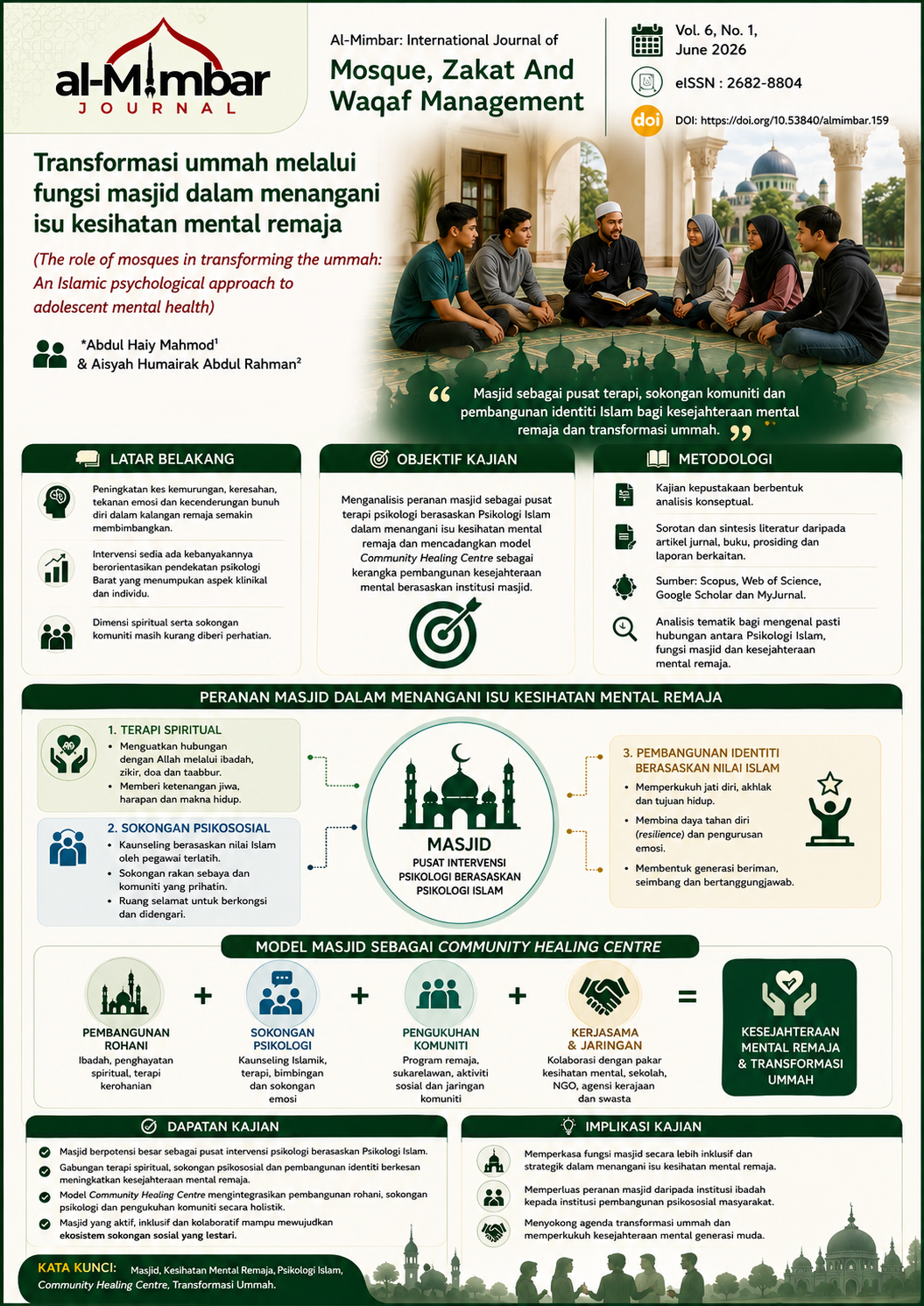
Transformasi ummah melalui fungsi masjid dalam menangani isu kesihatan mental remaja
The role of mosques in transforming the ummah: An Islamic psychological approach to adolescent mental health
DOI:
https://doi.org/10.53840/almimbar.159الكلمات المفتاحية:
Mosque، Adolescents، Islamic Psychology، Psychological Therapy، Ummah Transformationالملخص
ABSTRACT
Adolescent mental health has become an increasingly critical issue at both global and national levels, as statistics indicate rising rates of depression, anxiety, academic stress, and social problems among youth. Most contemporary interventions remain largely grounded in Western psychological frameworks that emphasize clinical and individual approaches, often neglecting the spiritual and communal dimensions essential to holistic well-being. Within the Islamic tradition, the mosque represents a central institution that functions not only as a place of worship but also as a social, educational, and spiritual healing space. This article examines the role of the mosque as a center for psychological therapy for adolescents through the lens of Islamic Psychology. The literature review highlights the perspectives of classical Muslim scholars, including al-Ghazali’s concept of tazkiyah al-nafs (purification of the soul), Ibn Sina’s emphasis on the balance between intellect and the soul, and al-Attas’s framework of holistic human development. Mosques possess the potential to offer three primary forms of therapeutic intervention: spiritual therapy through congregational prayer, Qur’anic recitation, and dhikr that foster inner peace; psychosocial therapy through peer support, ukhuwah (brotherhood), and guidance from imams or religious mentors; and identity therapy through mosque-based youth programs that strengthen self-esteem, reinforce religious values, and prevent identity crises. This article proposes a model of the mosque as a Community Healing Centre, comprising three core components: spiritual development, psychological support, and social empowerment. The findings suggest that the transformation of the ummah requires mosque institutions that are more inclusive and responsive to contemporary adolescent challenges, thereby reaffirming the mosque’s role as a key agent of mental and spiritual well-being within society.
Keywords: Mosque, Adolescents, Islamic Psychology, Psychological Therapy, Ummah Transformation
المراجع
Abas, N., & Yusof, M. (2025). Kemudahan Prasarana dan Peranan dalam Mengimarahkan Masjid: Kajian di Daerah Kuala Langat, Selangor:(Infrastructure Facilities and Their Role in Enlivening Mosques: A Study in The District Of Kuala Langat, Selangor). International Journal of Mosque, Zakat and Waqaf Management (Al-Mimbar), 5(1), 15-28.
Abd Malek, N. S. A., Raop, N. A., & Hassan, M. S. (2020). Peranan kesihatan mental sebagai moderator terhadap kecenderungan bunuh diri. Jurnal Sains Sosial, 5(1), 87-99.
Abu-Ras, W., Aboul-Enein, B. H., Almoayad, F., Benajiba, N., & Dodge, E. (2024). Mosques and public health promotion: a scoping review of faith-driven health interventions. Health Education & Behavior, 51(5), 677-690.
Al-Asyhar, T. (2024). Dimensi Holistik Psikologi Sufi: Studi Perbandingan Psikologi Mainstream: The Holistic Dimension of Sufi Psychology: A Comparative Study with Mainstream Psychology. Jurnal Bimas Islam, 17(2), 247-278.
Aldi, M. S., Asyham, D. A., Kesuma, B. A., & Suryani, I. (2023). Peserta Didik Dan Tazkiyah. Didaktik: Jurnal Ilmiah PGSD STKIP Subang, 9(2), 4296-4303.
Arifin, Z., Mansyur, M. H., Abidin, J., & Mukhtar, U. (2022). Pendidikan dan kesehatan mental bagi remaja dalam persfektip Islam. ABDI MOESTOPO: Jurnal Pengabdian Pada Masyarakat, 5(2), 188-194.
Agustiani, H. (2006). Psikologi perkembangan: Pendekatan ekologi kaitannya dengan konsep diri dan penyesuaian diri pada remaja. Bandung: Refika Aditama.
Amalia, M. (2016). Pendekatan Psikologi dalam Kajian Islam. El-Furqania: Jurnal Ushuluddin dan Ilmu-Ilmu Keislaman, 2(02), 209-225.
Basri, J. (2018). Masjid sebagai pusat pendidikan masyarakat. Jurnal Naratas, 1(1), 22-28.
Fatma, K., & Aisyah, D. (2021). Peningkatan Kesehatan Mental Anak dan Remaja Melalui Ibadah Keislaman. Al-Isyrof: Jurnal Bimbingan Konseling Islam, 3(1), 1-7.
Fathurrahman, F. (2015). Masjid sebagai Pusat Pendidikan Islam Masa Klasik. Kreatif: Jurnal Pemikiran Pendidikan Agama Islam, 13(1), 18-29.
Fauzi, A. (2006). Masjid Sebagai Pusat Pembinaan Remaja. Al Qalam, 23(2), 318-332.
Hamidah, R. N., & Rosidah, N. S. (2021). Konsep kesehatan mental remaja dalam perspektif Islam. Prophetic Guidance and Counseling Journal, 2(1), 26-33.
Hasmiansyah, R., Fauzan, A., & Samsudin, M. (2021). Analisis pemikiran psikologi islam (studi terhadap konsep psikologi islam dalam pandangan hasan langgulung). Jurnal Diversita, 7(1), 63-71.
Hasan, A. B. P., & Tamam, A. M. (2018). The implementation of mental health concept by Imam Al-Ghazali in Islamic counseling guidance. Journal of Strategic and Global Studies, 1(1), 1.
Idris, M., Mohd, B., Azman, S., & Shaharuddin, B. (2020). Kajian Terhadap Aktiviti-Aktiviti Di Masjid Al-Hasanah Bandar Baru Bangi Ke Arah" Masjid Mesra Remaja.
Ismail, N., Azizan, N. I., Zin, S. M. M., Senin, N., Kari, D. N. P. M., & Karim, F. M. (2024). Integrasi Model Biopsikososial-spiritual dan Kaunseling Islam Ke Arah Memperkasakan Kesejahteraan Psikologi Mahasiswa Muslim Era Digital. Human Sustainability Procedia, 4(2), 9-20.
Jais, S. M., Mohaiyuddin, N., Bistamam, M. N., Arip, M. A. S. M., & Othman, M. K. (2024). Adolescent mental health interventions: A review of psychological and an Islamic approach. Global Journal Al-Thaqafah, 14(1), 50-61.
Jamaludin, L., Johari, K. S. K., & Amat, S. (2018). Keperluan Intervensi Kaunseling Berasaskan Pendekatan Terapi Bermain Adlerian Terhadap Kesejahteraan Kendiri Holistik Kanak-Kanak Mangsa Pengabaian: Satu Kajian Kes. e-BANGI, 13(3), 104-118.
Jannah, M. (2017). Remaja Dan Tugas-Tugas Perkembangannya Dalam Islam. Psikoislamedia: Jurnal Psikologi, 1 (1), 243–256.
Jimatul Rizki, N. (2022). Teori Perkembangan Sosial dan Kepribadian dari Erikson (Konsep, Tahap Perkembangan, Kritik & Revisi, dan Penerapan). Epistemic: Jurnal Ilmiah Pendidikan, 1(2), 153-172.
Johari, M. F., Kamsani, S. R., & Abdul Ghani, M. (2022). Tingkah laku mencederakan diri sendiri dalam kalangan remaja: Satu kajian konseptual. Jurnal Pembangunan Sosial (JPS), 25, 217-238.
Kadir, N. B. Y. A., Johan, D., Aun, N. S. M., & Ibrahim, N. (2018). Kadar Prevalens Kemurungan dan Cubaan Bunuh Diri dalam kalangan Remaja di Malaysia (The prevalence of depression and suicide attempts among adolescents in Malaysia). Jurnal Psikologi Malaysia, 32(4).
Kamilla, K. N., Saputri, A. N. E., Fitriani, D. A., Zahrah, S. A. A., Andryana, P. F., Ayuningtyas, I., & Firdausia, I. S. (2022). Teori Perkembangan Psikososial Erik Erikson. Early Childhood Journal, 3(2), 77-87.
Kasim, T. S. A. T., Ahmad, S. S., & Rahman, S. M. H. S. A. (2024). Psikoterapi Tasawuf dan Peranannya dalam Pengurusan Emosi Pelajar: Sufi Psychotherapy and Its Role in Managing Students’ Emotions. Journal of Islamic Educational Research, 10(1), 62-69.
Lestari, N. A. (2024). Pentingnya Kesehatan Mental dalam Perkembangan Remaja. ISTISYFA: Journal of Islamic Guidance and Counseling, 3(2).
Mahessa, A., Zakir, Z. L., Dayati, R., Pratiwi, Y., & Wismanto, W. (2024). Revitalisasi fungsi sosial masjid: Menjadikannya sebagai pusat pelayanan kesehatan di lingkungan masyarakat. Moral: Jurnal Kajian Pendidikan Islam, 1(4), 216-232.
Mayasari, R. (2013). Islam dan psikoterapi. Al-Munzir, (2).
Masyhuri, M. (2012). Prinsip-Prinsip Tazkiyah Al-Nafs Dalam Islam Dan Hubungannya Dengan Kesehatan Mental. An-Nida', 37(2), 95-102.
Mokalu, V. R., & Boangmanalu, C. V. J. (2021). Teori Psikososial Erik Erikson: Implikasinya Bagi Pendidikan Agama Kristen Di Sekolah. VOX EDUKASI: Jurnal Ilmiah Ilmu Pendidikan, 12 (2), 180–192.
Mujib, A. (2005). Pengembangan psikologi Islam melalui pendekatan studi Islam. Jurnal Psikologi Islam, 1(1), 17-32.
Nasir, M. A. M., Yusoff, A. M. M., Faudzi, F. N. M., Ali, N. A. T. M., & Ismail, S. (2024). Model Kesihatan Mental Remaja Luar Bandar Di Malaysia:(A Mental Health Model for Rural Adolescents in Malaysia). Jurnal Pembangunan Sosial, 27, 185-216.
Nazim, A. M. (2015). Pendekatan psikologi dakwah dalam menangani remaja berisiko: fokus pendekatan bimbingan jiwa. Jurnal Hadhari, 7(2), 63-73.
Pauzi, H. M., & Noh, N. A. (2022). Isu dan Literasi Kesihatan Mental dalam kalangan Remaja. Malaysian Journal of Social Sciences and Humanities (MJSSH), 7(8), e001688-e001688.
Rizal, A. (2022). Tazkiyah Al-Nafs Sebagai Terapi Dalam Permasalahan Masyarakat Modern. Jurnal Al-Aqidah, 14(2), 120-128.
Rusuli, I. (2022). Psikososial remaja: Sebuah sintesa teori erick erikson dengan konsep islam. Jurnal As-Salam, 6(1), 75-89.
Saifulamri, M. I. D., Khir, M. H. M., Yatin, S. F. M., & Jali, J. M. (2024). Menyingkap Sejarah Penubuhan Masjid Saujana Utama, Sungai Buloh, Daerah Kuala Selangor. Jurnal Kajian Lisan Malaysia, 2(3), 93-108.
Samsudin, S., Ismail, R., Daud, S. N. M., & Yahya, S. (2024). The prevalence and underlying factors of mental health disorders in Malaysian youth. Journal of Affective Disorders Reports, 15, 100706.
Salleh, S., Wazir, R., Abd Rahman, K. A., Sudi, S., Awang, A. H., & Kamarulzaman, A. I. (2022). Mengatasi Masalah Kesihatan Mental Melalui Pendekatan Psiko Spiritual. International Journal of Education, Psychology and Counseling, 7(47), 601-615.
Syafangat, M., & Tasrif, M. (2024). Konsep Tazkiyat Al-Nafs Dalam Al-Quran (Perspektif Tafsir MaqÄ á¹£ idi). At-Tafasir: Journal of Quranic Studies and Contextual Tafsir, 1(1), 88-102.
Tamuri, A. H. (2021). Konsep Dan Pelaksanaan Fungsi Masjid Dalam Memartabatkan Masyarakat:(The Concept And The Implementation Of The Role Of Masjid In Elevating The Society). International Journal of Mosque, Zakat And Waqaf Management (Al-Mimbar), 1-12.
World Health Organization. (2025, September 1). Mental health of adolescents. https://www.who.int/news-room/fact-sheets/detail/adolescent-mental-health
Wil, N. C., & Othman, N. (2021). Tahap resilien dan kesihatan mental individu di era pandemik COVID-19: Satu kajian empirikal dalam kalangan remaja di Malaysia. Malaysian Journal of Social Sciences and Humanities (MJSSH), 6(9), 26-34.
Zulkipli, S. N., Suliaman, I., Abidin, M. S. Z., Anas, N., Ahmat, A. C., & Mohamad, M. A. (2023). Kemurungan remaja dan kaedah menanganinya menurut perspektif islam. Journal Islamic Philanthrophy and Social Finance, 5(2), 85-98.
التنزيلات
منشور
إصدار
القسم
كيفية الاقتباس